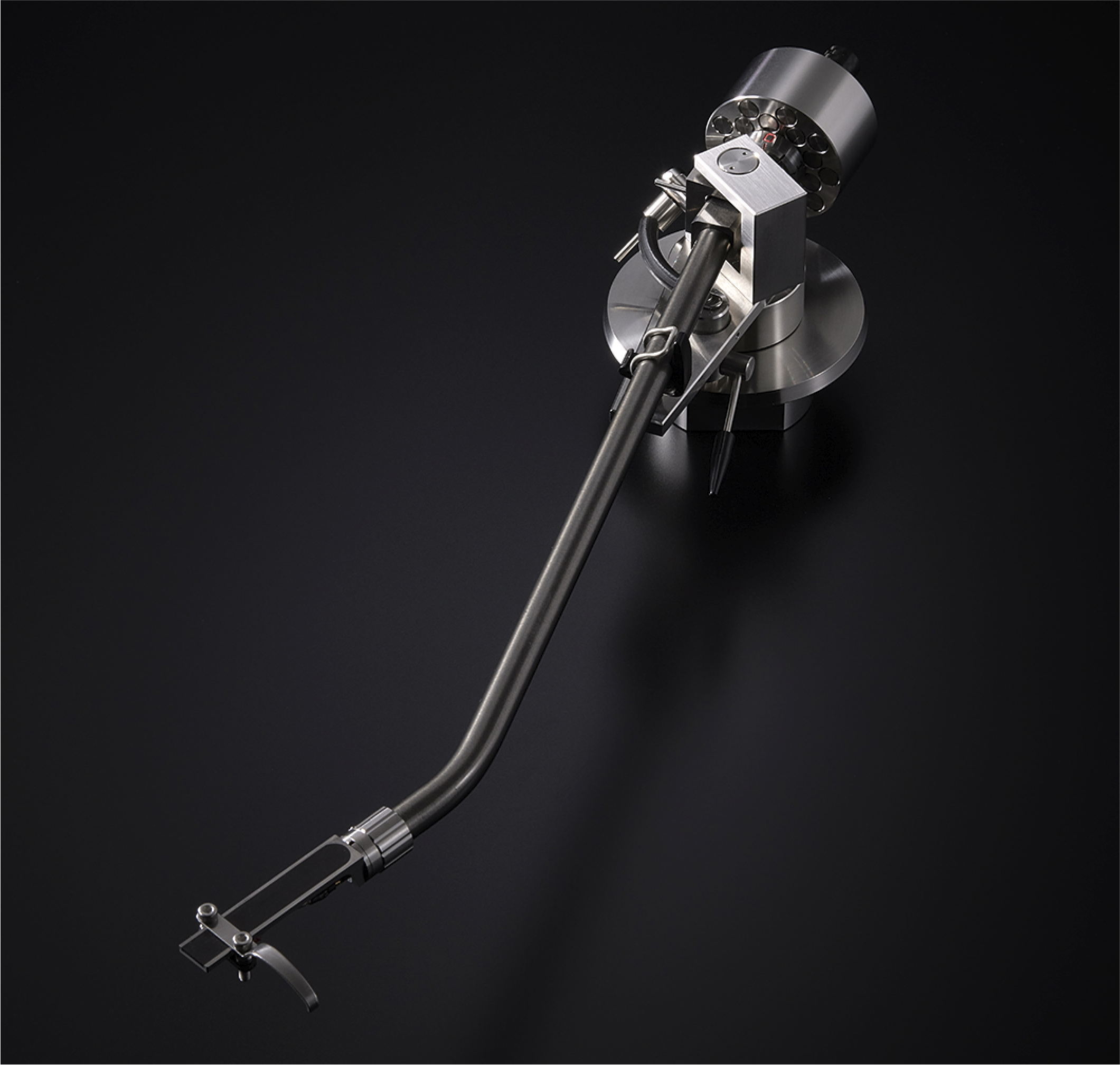
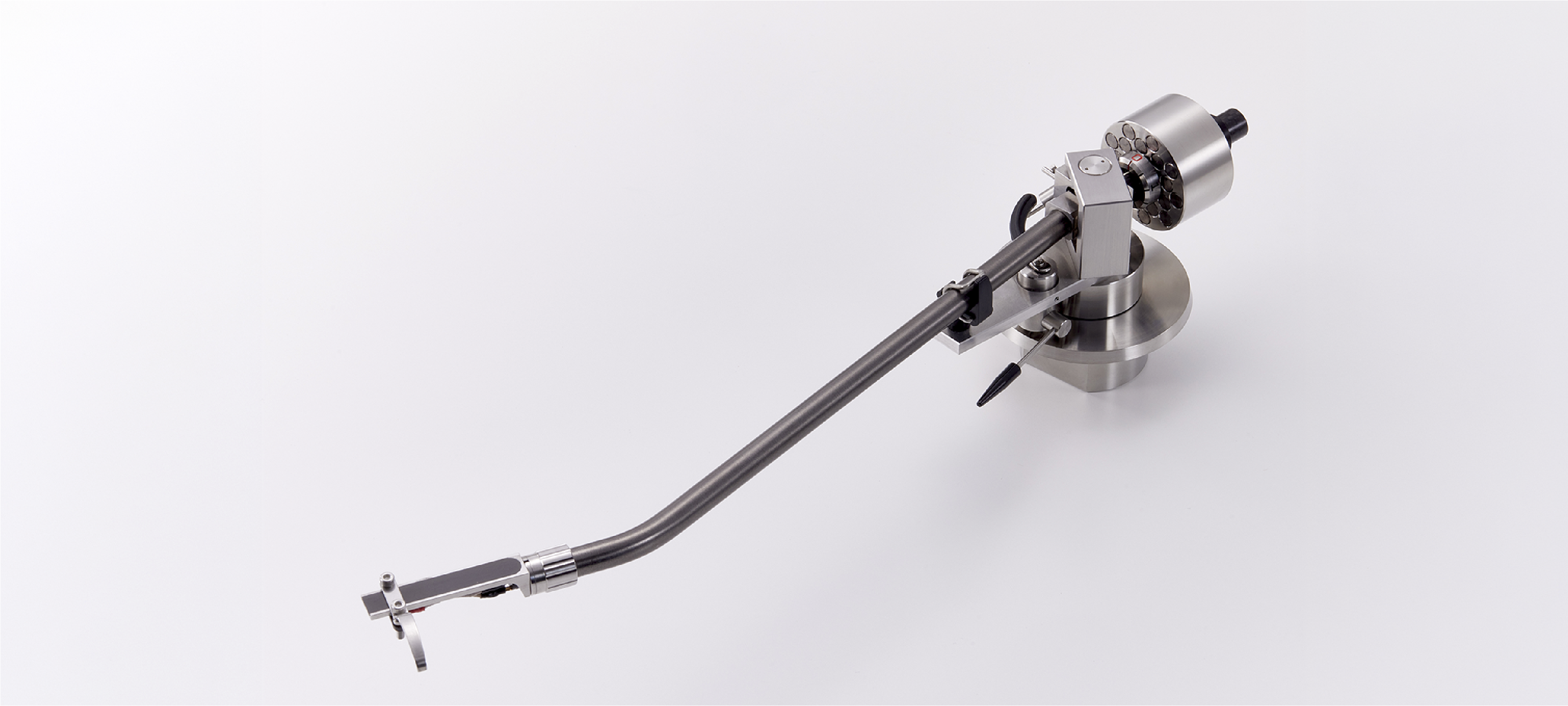
After a single gust of wind passes, only the music remains.
The ultimate premium model, “KATANA,” born from relentless pursuit of excellence.
Features
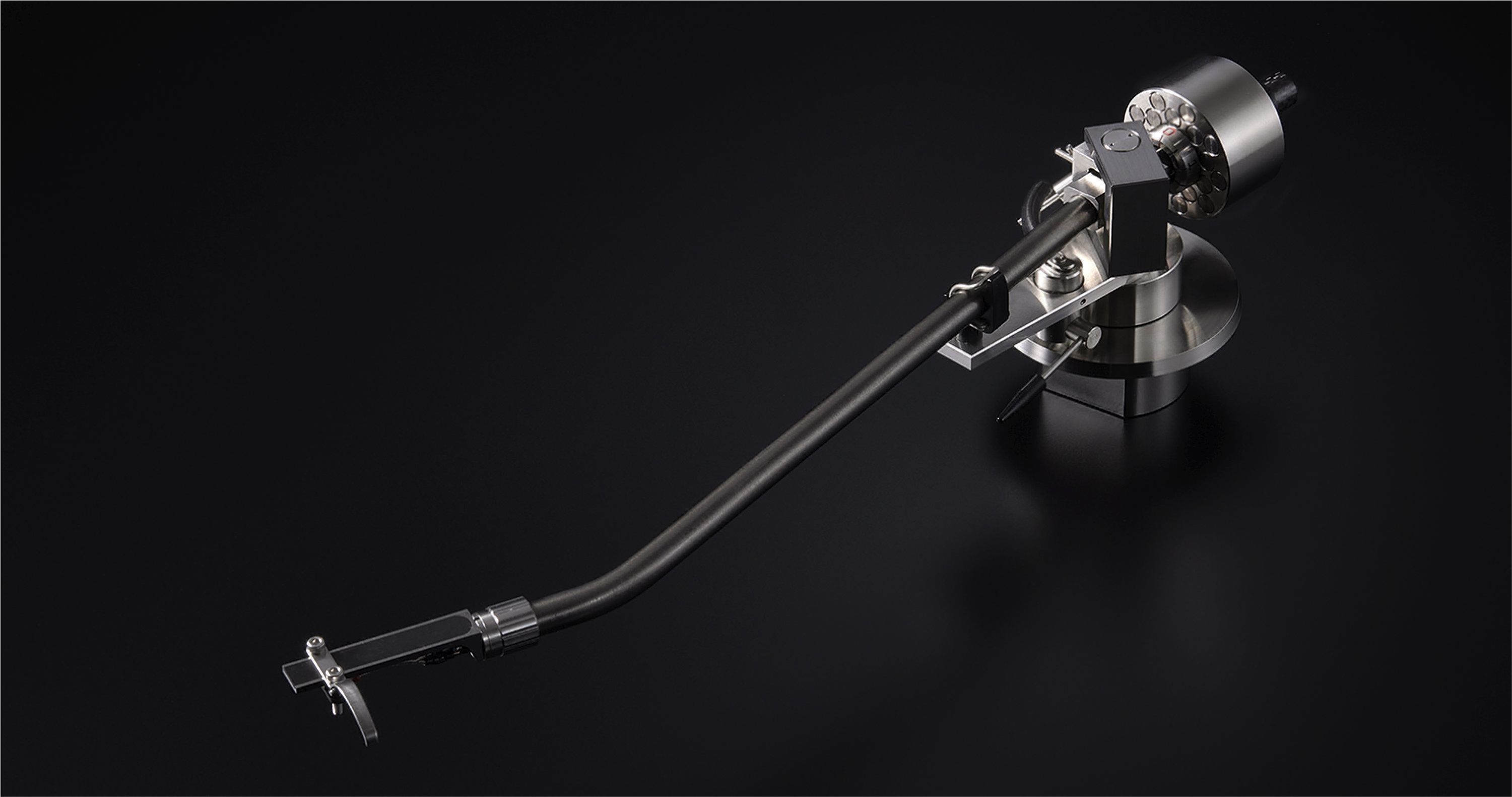
Developer Masataka Hamada’s relentless pursuit of excellence has led to the creation of a new premium model in 2024. We’ve named this next-generation premium model “KATANA” (sword). After a gust of wind passes, only the music remains. Just as a razor-sharp Japanese kitchen knife cuts through ingredients without straining them, delivering their true flavor without any off-notes, GLANZLAB’s “Katana” is truly a masterpiece. Without applying any unnecessary force to the grooves etched into the LP, it accurately transmits only the recorded sound to the cartridge. It is a masterpiece assembled with utmost dedication, delivering a crisp, clean sound that rises with precision.
- KATANA Arm Pipe
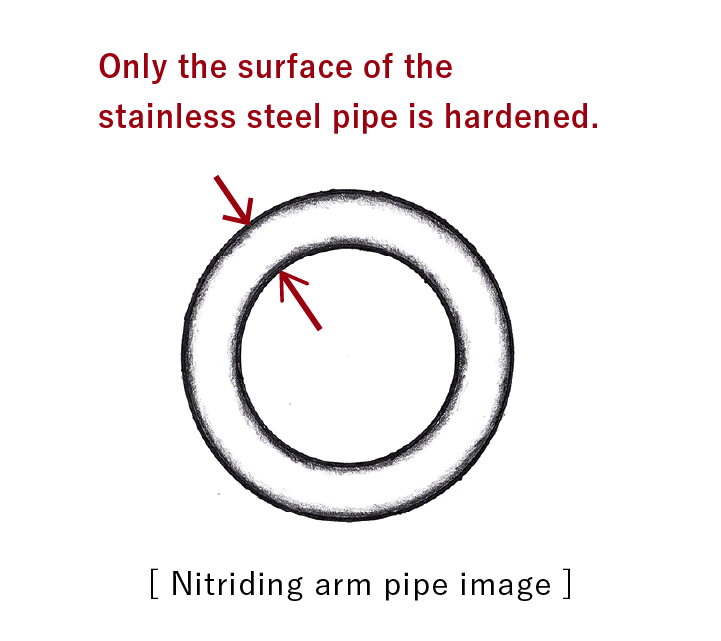
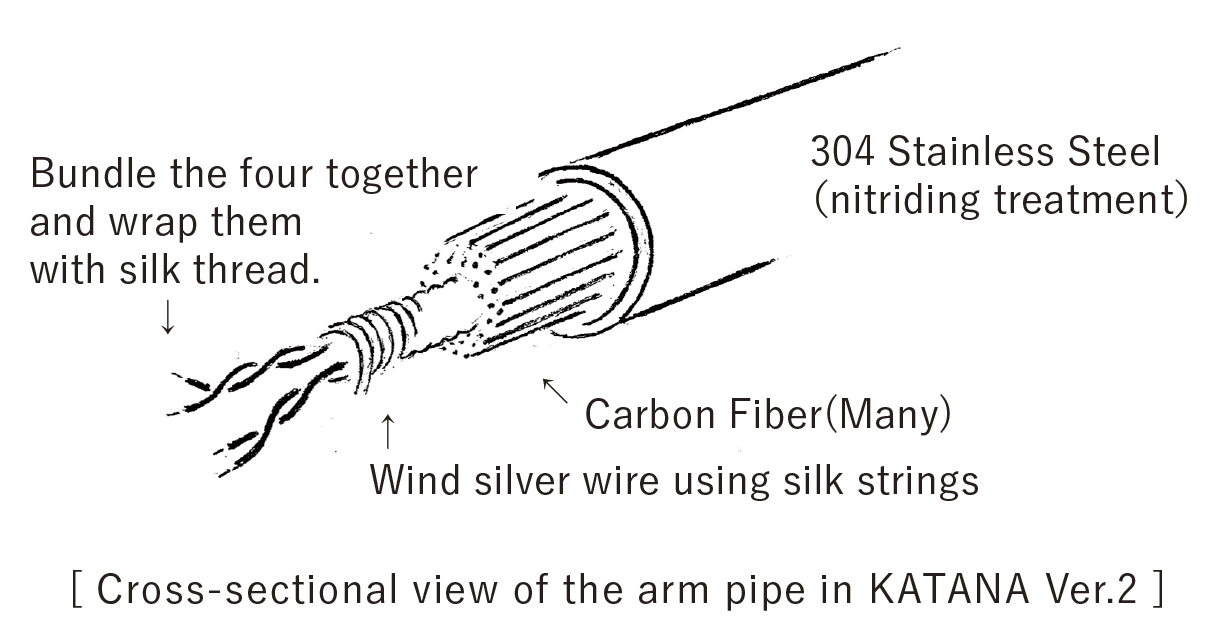
By significantly increasing the rigidity of the arm pipe—which serves as the sound pathway—we’ve dramatically improved the crisp, snappy response. However, the nitriding process used to increase rigidity has its drawbacks: if the temperature is too high, the material can deform; the original iron is prone to rust; and the surface oxides can leave a dirty, uneven color resembling burnt brick. As a result, we went through repeated trial and error under various conditions. We perform high-temperature nitriding on stainless steel, gently sand the surface, and then apply a clear coat to prevent rust and match the texture of the stainless steel.
Through this labor-intensive process, we have preserved the inherent elasticity of the stainless steel while increasing the rigidity of both the outer and inner surfaces of the pipe, thereby achieving a highly rigid tone arm.
- Ultimate Solution for Resonance
High-density stainless steel is used for the arm pipe—the path through which sound travels—and damping material is arranged in parallel within it to reliably enhance the effectiveness of resonance control. Furthermore, the weight section is made of stainless steel and features a hybrid structure with tungsten embedded at the tip, secured with rubber for vibration damping.
With the KATANA, where sound response is exceptionally quick, measures to counter distortion are also critically important. If distortion (reverberation and reflections) is not eliminated one by one, the sound will become muddy. We present the ultimate solution for countering distortion through a structural design that allows the KATANA to fully demonstrate its performance. Please refer to the “Design Philosophy” section for a detailed explanation of distortion (reverberation and reflections).
Specifications
-
Model number
-
MH-12 KATANA
-
Balancing
-
Static Balancing
-
Total Length(from counter weight shaft end headshell terminal)
-
330mm
-
Effective Length(from centre of tonearm Base to stylus tip)
-
305mm
-
Practical Length(from centre of tonearm Base to centre of turntable)
-
290mm
-
Offset Angle
-
20°
-
Adaptable cartridge weight(incl headshell)
-
13~44g
-
Total weight
-
1.2kg
-
Overhung
-
15mm
-
Tracking weight range
-
0.5g(Minimum scale) - over 10g (5g/360 °rotation)
-
Adjustable height(from plinth surface to horizontal height of arm tube)
-
41~70mm
-
Headshell weight
-
12g(Incl.screws and lead wires)
-
Shaft dimensions to mounting base
-
φ16mm
-
Mounting hole size
-
φ30mm
-
Fixing depth size
-
Up to 20mm(Another size is available)
Structure Overview
-
Basic material
-
SUS304
-
Weight section damper structure
-
Five different damper materials
-
Weight section damper material
-
rubber + carbon fiber + plastic + paper + rubber again
-
Weight material
-
SUS304 + tungsten
-
Vertical axis material
-
SUS304
-
Arm pipe material
-
SUS304 + nitriding treatment + surface resin processing
-
Vibration damping for the arm pipe
-
many carbon fiber
-
fulcrum
-
3 radial bearings + 1 thrust bearing
-
Gimbal support
-
YES
-
Internal arm pipe wiring
-
silver wire
-
Output code
-
5P DIN Plug + 6N OFC
-
Headshell
-
Plug-in method
-
Headshell material
-
SUS304 + carbon fiber + silver wire
-
Base material
-
SUS304
Design and Structure
Arm Pipe
The arm pipe has a significant impact on sound quality. In the KATANA ver.1 (initial model), vibration damping was achieved using carbon fiber and high-grade polyester fiber; in the upgraded ver.2, only high-density carbon fiber is used to enhance the vibration damping effect.
◉The success rate for packing carbon fiber “tightly” is less than 50 percent. Assembly requires advanced technical skills and experience.
◉Low-resistance silver wire is wrapped in silk thread; four strands of this silk-wrapped wire are then bundled together and wrapped again in silk thread. This bundle is wrapped in carbon fiber and inserted into the arm pipe—a process that requires a high level of technical skill and know-how. This design provides vibration damping from both sides—preventing distortion from the silver wire and the arm pipe itself—resulting in sound that more closely resembles the original source.
Weight Section
The KATANA’s weight section features a five-layer damper structure designed to account for a wide frequency range and absorb distortion across each frequency band.
◉Since the arm pipe is “packed tightly” with carbon fiber, we increased the number of holes in the main weight from 16 to 18 to maintain balance. We embedded heavy tungsten into the 18 holes to balance the weight and bring the center of gravity closer to the pivot point.
◉All 18 tungsten rods embedded in the weight are bonded with rubber, which also serves to dampen vibrations, further enhancing distortion reduction.

Pivot Points and Product Materials
The arm body is primarily constructed from hard stainless steel. While machining this material was extremely challenging, the result is sound quality of unparalleled excellence. The joints between components are designed to ensure a precise, flush contact surface, minimizing the use of adhesives as much as possible.
If the pivot—which is key to sound quality—has a flimsy structure, it directly affects sound quality. Four large-diameter bearings provide firm support, preventing resonance and wobble while enhancing tracking performance. In particular, the lower bearing along the vertical axis employs a high-precision thrust bearing. Assembled with meticulous care, this support structure enables the heavy tonearm to move with high sensitivity, significantly improving tracking performance.
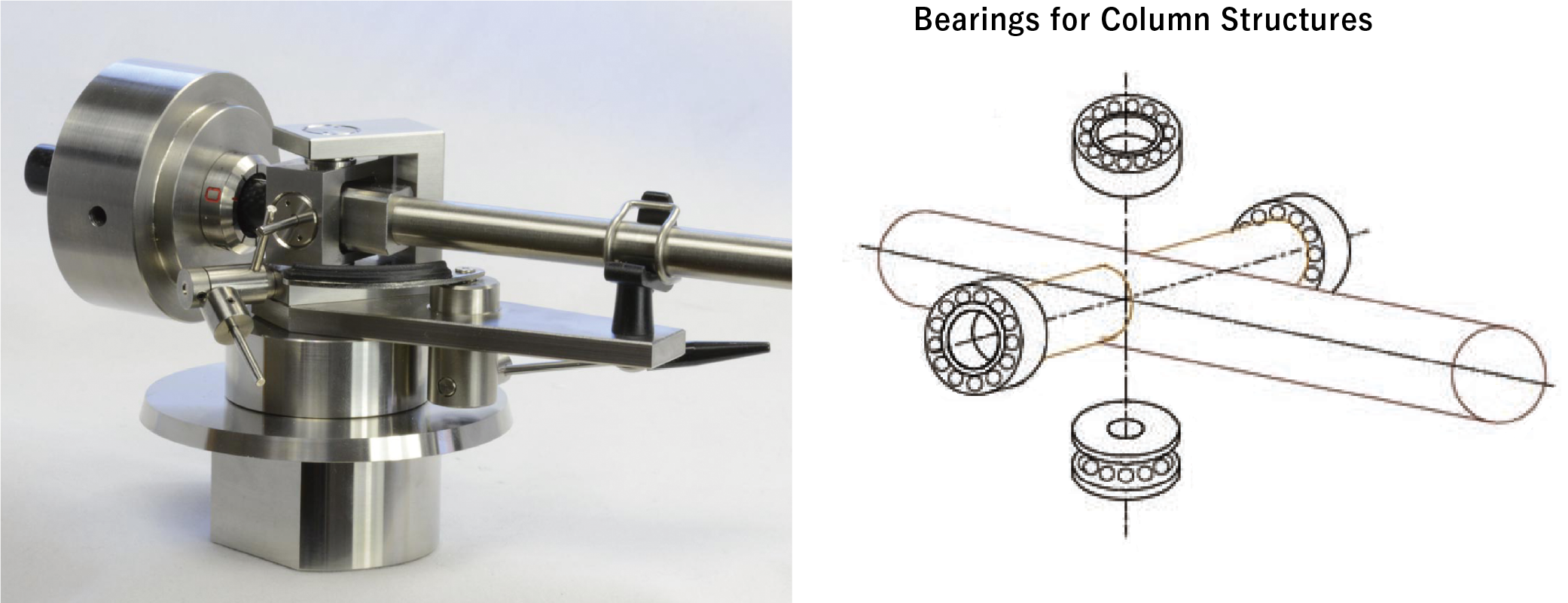
Tone Arm Deflection Rate
We took great care to ensure the design did not result in a “wild” structure, like swinging a straight rod around. Imagine swinging an L-shaped rod—it places unnecessary torsional stress on your hand. With that in mind, we positioned a “vibration-absorbing structure” at the most precise location to effectively dampen distortion.
Inside Force Canceller (IFC)
True to our motto, “Simple is best,” we designed the Inside Force Canceller, armrest, and arm lifter to be easily removable. Removing unnecessary components from the tonearm reduces distortion and results in a clearer sound quality.
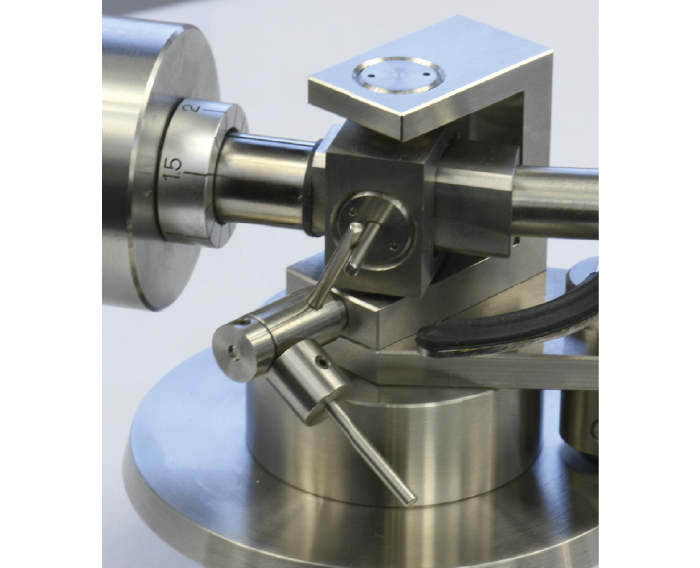
Status with IFC
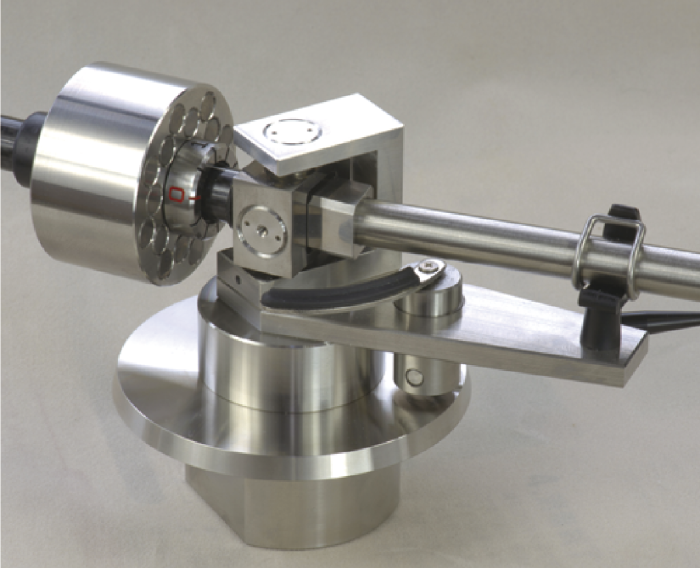
After removing the IFC
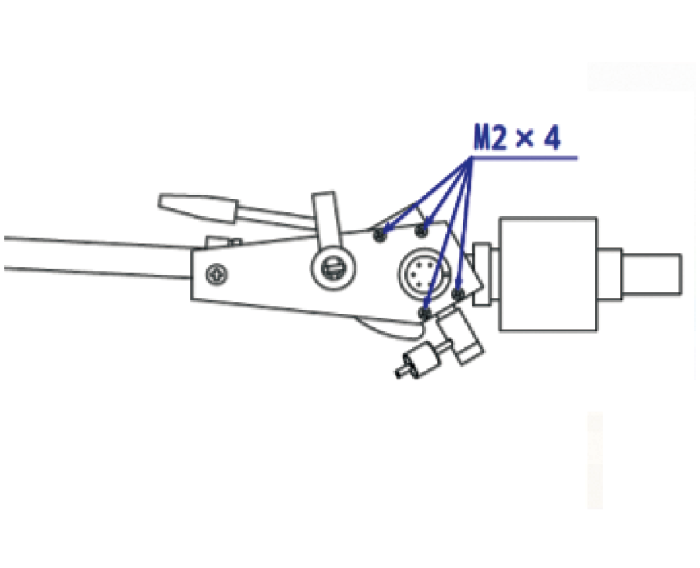
How to Remove the Base Bracket
Remove the four M2 flat-head screws on the back.
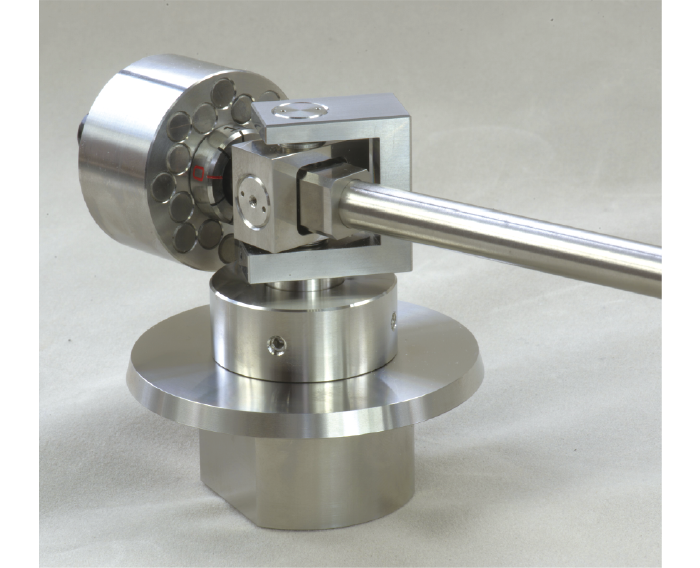
With the base bracket removed**If you remove the base bracket, please provide your own armrest support for the tone arm.
Headshell
The monolithic, machined-from-a-single-piece construction significantly reduces vibration loss. Furthermore, by eliminating all unnecessary material as much as possible, we’ve achieved a weight comparable to aluminum despite being made of stainless steel, resulting in an ultra-lightweight structure that firmly supports the entire cartridge. The carbon fiber on the top absorbs unwanted signals. The slim, 10mm-wide design provides support close to the cartridge’s core. By connecting directly to this core, vibration loss is reduced and sound quality is further enhanced.
Download